

Financial independence, myth or reality?

The concept of financial independence is interesting for more than one reason. Both an Eldorado and a minefield, it ultimately encompasses the concepts of freedom and desire. To shed light on this subject, myLIFE met with Jessica Thyrion, Financial Education Advisor (ABBL Foundation), and Hélène Lange, Head of Business Coordination (ABBL).*
As a preamble, let’s define! What does it mean to be financially independent?
Jessica Thyrion: To be financially independent simply means not to depend on a recurring external income—salary being the most common example—to cover one’s occasional or daily expenses. On the contrary, it means having other financial resources, notably from investment strategies, stock market or real estate for instance, that will cover these needs.
Hélène Lange: Beyond this academic description, being financially independent means having a certain freedom of choice in one’s life and in the use of one’s time. It allows you to prioritize your personal projects and aspirations without being constrained by a salary obligation. It is not necessarily opposed to working for an income: it is rather about being able to decide when, how, and why you work, rather than systematically sacrificing your time to a job for a salary.
What should one pay attention to when approaching such a concept?
JT: On this subject, it is indeed essential to clarify the following point: someone who is financially independent is not necessarily someone who is “wealthy.” In fact, there are lifestyles that do not require significant resources, for which financial independence therefore seems easier to achieve. Despite this, in the mind of the general public, it is rather seen as the privilege of people who travel by helicopter and spend their vacations on a yacht. So that is not true.
HL: As we will see, it is all a matter of choices, ambitions, and one’s outlook on life. When one wishes to achieve financial independence, it is fundamental to know what one wants, what matters to oneself, in order to determine what will need to be put in place to meet one’s needs, without the imperative contribution of a salary. “Know thyself,” the Greek philosopher Plato had his character Socrates say, echoing a famous maxim originally inscribed on the pediment of the temple of Apollo at Delphi. This statement perfectly illustrates our concerns here. One can even clearly say that our subject has a philosophical dimension, even before it is a matter of financial education, which it also is, of course.
“Know thyself,” this quote from Socrates perfectly illustrates the challenges faced by those who wish to achieve financial independence. (Hélène Lange)
But then, are there as many types of financial independence as there are financially independent people?
JT: Absolutely! Once again, it all depends on each person’s aspirations. The threshold at which one is considered financially independent is vague in this respect. The only common denominator is the ability to support one’s existence autonomously from a financial perspective.
HL: Let’s add that the notion of financial independence is fluid in that, in addition to what Jessica just said, it evolves depending on the stages of life. Financial independence at 33, as a renter without children, is not the same situation as someone with a family to support and loans to pay. Nor is it the same for an elderly person, who reassesses their needs at the twilight of their life.
Let’s eliminate any unnecessary suspense: is it really within anyone’s reach?
HL: Let’s be honest, not everyone will be able to stop working, but everyone has the right to aspire to greater financial peace of mind, to no longer depend exclusively on a salary income. What’s interesting here is that financial independence then becomes not a vague and hard-to-define status, but an ideal, a horizon towards which to strive within a financial strategy.
JT: Even if our aspirations are modest and our lifestyle is frugal, it will be very complicated to meet our needs without working unless we have inherited a sum of money beforehand. Moreover, someone who is financially independent is not necessarily someone who does not work. It’s rather someone who has chosen their work and all the conditions surrounding it, prioritizing a better quality of life in line with their aspirations. This obviously raises the question of the extra-financial value of work, of its necessity for humans. Once again, we are in philosophical considerations!
To think that financial independence is the privilege of Luxembourg and its, admittedly, flourishing economy would be a caricature. (Jessica Thyrion)
Why is financial education so crucial for our topic?
JT: As a foundation, our role is also to inform and raise awareness among the population about certain misconceptions or abuses related to money and, indirectly, to the topic that concerns us today. To think that financial independence is the privilege of Luxembourg and its, admittedly, flourishing economy would be a caricature. The poverty rate among the country’s population is 18%, which is not insignificant and clearly suggests that for this segment of the population, financial independence remains a very difficult goal to achieve.
HL: Financial education is therefore essential, even though it remains rare in the country, as shown by the figures we submitted to the OECD, in collaboration with ILRES. Barely more than 50% of the thousand people surveyed had sufficient financial knowledge to be considered financially literate. That is, able to make sound financial decisions and capable of managing a budget.
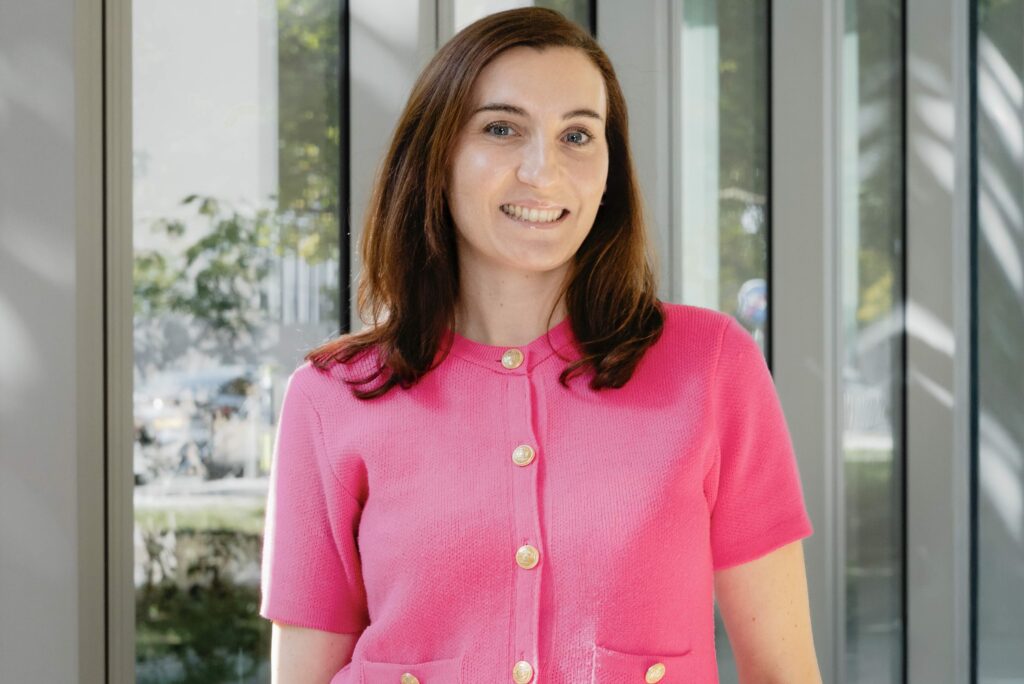
JT: Strengthening financial education is all the more essential today because the younger generation is best placed to achieve this financial independence. Not only because they are the best “equipped,” in that they have many ways to access financial knowledge. But also because they have the most time ahead of them, a decisive factor!
HL: On the other hand, this is a segment of the population that is highly exposed, especially on social networks, to false information. As their appetite for investment is sometimes great, it is important to ensure that the financial content they absorb is solid. In this respect, the topic of Bitcoin, among others, arouses great interest but we see that it also carries a large number of illusions, erroneous shortcuts, or even basic falsehoods.
For our readers whose goal this is, what recommendations would you give them?
HL: After what we’ve just said, it’s clear that it’s very difficult to establish a common ground or a typical profile of the financially independent person. And besides, it’s not our role to guide people toward one financial product or another. On the other hand, we always identify three strategic pillars to perhaps achieve such independence, or at least get closer to it. The first is consumption, or more precisely, responsible and considered consumption. In other words, it’s about not living beyond your means, or spending money you don’t have.
JT: The second pillar is saving, or setting money “aside.” The amount in question isn’t the most important thing, but you need to start early and do it regularly, both to build up an emergency fund and to guarantee maximum financial independence. You know the saying: “Little streams make big rivers.” Finally, the last pillar is to invest your capital, and to do so methodically and in a diversified way. In financial markets, in Europe or elsewhere, in private markets, in real estate, and why not in art too…
HL: For all these topics, and many others still, such as taxation or inheritance, the final recommendation we can make to our readers is to turn to professionals: notaries, tax experts, insurers, bankers, etc. They will be your best allies in achieving financial independence.
* Content translated from French by the BIL GPT AI tool
 Mortgage
 Personal loan
 Savings